ACTIVITY REPORT ON CHURCH LEADERS TRAINING
COURSE: Christianity and Islam
Training Locations: Mishiha and Cankuzo Centers
Dates: 9th–14th August 2026
Trainers: Patrice and François, assisted by two volunteers
1. Introduction
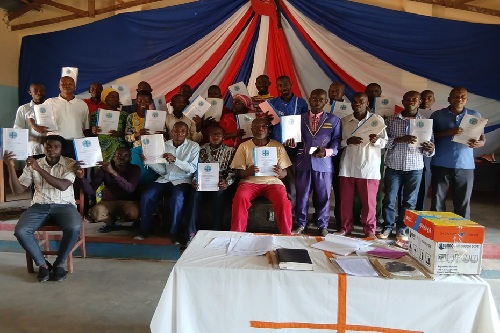
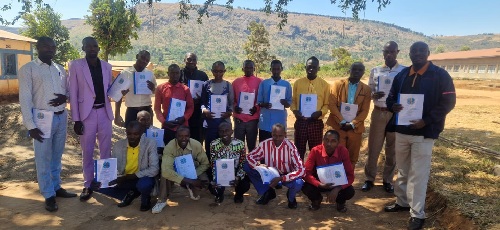
From 9th to 14th August 2026, a Church Leaders Training activity on Christianity and Islam was conducted at the Mishiha and Cankuzo training centres. The training was conducted by two trainers, Patrice and François, with the assistance of two volunteers. One team travelled to Mishiha while the other team conducted the training in Cankuzo. The training was an important opportunity for church leaders to deepen their understanding of Islam, strengthen their knowledge of the Christian faith, and consider appropriate and respectful ways of sharing the Gospel with their Muslim neighbours.
2. Objectives of the Training
The main objective was to complete the training material on Christianity and Islam and to help participants develop a better understanding of both Christian and Muslim beliefs. Particular attention was given to understanding the similarities and differences between Christianity and Islam and to equipping church leaders to engage with Muslims in a knowledgeable, respectful, and Christ-centred way.
3. Topics Covered
* During the training, participants covered a number of important topics, including:
* Sin and salvation from both Christian and Muslim perspectives.
* Yahweh and Allah, including similarities and differences in the understanding of God.
* The Christian understanding of the Trinity. A careful study of the Bible and the Qur'an..
* Ways of sharing the Gospel with Muslims.
* Bridging the Divide between Islam and the Gospel, which brought the course to a conclusion.
Considerable time was given to studying the Bible and the Qur'an. This helped participants become more familiar with the beliefs and teachings they may encounter when engaging with Muslim neighbours.
4. Participation and Response in both centers
* The training was successful, and participants followed the sessions attentively and with considerable interest. Many expressed appreciations for the opportunity to learn more about Islam and to think about how they can reach out to Muslims in their communities.
* The training also led participants to reflect on the responsibility of church leaders not only to bring people to faith, but also to nurture and disciple believers so that they become mature and committed followers of Christ.
* Participants discussed the importance of taking time to nurture their congregations, teach God's Word, demonstrate Christ-like love, and help believers develop a strong foundation in their faith.
5. Challenges Identified in Mishiha
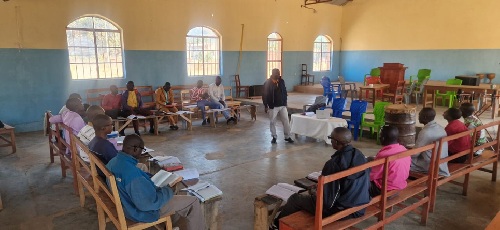
An important discussion took place with church leaders in Mishiha concerning the changing religious situation in their community. They explained that Islam is becoming increasingly influential in the area. They noted that a number of people returning from refugee camps in Tanzania are settling in Mishiha and that some Christians are being influenced to embrace Islam. The church leaders expressed concern that if churches do not pay greater attention to discipleship, Christian teaching, and the way they serve their communities, they may lose many of their members.
This led to an important reflection: The Church needs to move beyond simply seeking converts or believers and give greater attention to making disciples. New believers need to be nurtured, taught God's Word, encouraged to grow in faith, and equipped to live Christ-centred lives. The participants also emphasized the importance of demonstrating Christian love and building relationships across differences. They recognized that the Church's witness should be seen not only in what Christians say, but also in how they live and serve their neighbours.
6. Request for Further Training
The church leaders in Mishiha expressed a strong desire for further support. They asked whether we could return to provide additional training on practical strategies for sharing the Gospel with Muslim neighbours. This request shows that the participants are not only interested in gaining knowledge but also want to learn how to apply what they have learned in their daily ministry and community relationships.
7. Commitment to Reading and Understanding the Bible
Another encouraging outcome was the personal commitment made by many participants in both centers, to spend more time reading and studying the Bible. During the discussions, several participants admitted that they often do not make enough time for regular Bible reading and personal study. They recognized that this has been a weakness in their spiritual lives and expressed a desire to change this behaviour. Many participants decided to give more time to reading the Bible and seeking to understand its message more deeply. This was one of the encouraging personal outcomes of the training, as stronger church leaders and disciples require a strong foundation in God's Word.
8. Key Outcomes
The training produced several encouraging outcomes:
1. Participants gained a better understanding of Islam and its major beliefs and teachings.
2. Church leaders were encouraged to think more carefully about how to share the Gospel with Muslim neighbours in a respectful and Christ-centred manner.
3. Participants recognized the need to strengthen discipleship and move beyond simply making converts.
4. Church leaders became more aware of the need to nurture their congregations and help believers become mature in their faith.
5. Many participants committed themselves to giving more time to reading and studying the Bible.
6. Church leaders requested further practical training on strategies for reaching Muslim communities.
7. The training encouraged participants to consider how Christian love, service, and Christ-centred living can strengthen the Church's witness in their communities.
9.1. Testimony 1 – A New Understanding of the Need for Discipleship
One church leader shared that the training helped him realize that the Church cannot be satisfied simply with seeing people become believers. He explained that many Christians need continued teaching, encouragement, and spiritual formation if they are to remain strong in their faith. The training challenged me to give greater attention to discipleship in my parish, and to help believers develop a deeper relationship with Christ. Now I want to invest more time in nurturing people so that they can become mature and committed followers of Jesus Christ the son of the Living God.
9.2. Testimony 2 – A Renewed Commitment to Bible Reading
Another participant openly acknowledged that he had not been giving enough time to regular Bible reading and study. Through the training, he became more aware of how important it is for a church leader to know and understand God's Word.
He described this realization as a personal challenge and committed himself to changing his habits. He wants to make regular Bible reading and study a greater priority so that he can grow personally and also be better equipped to teach and guide others.
9.3. Testimony 3 – Preparing to Reach Muslim Neighbours
A participant from Mishiha shared how the changing situation in the community had made him realize that church leaders need to be better prepared to engage with their Muslim neighbours. He says: “The training gave me greater confidence to understand Islam and to think about how the Gospel can be shared with Muslims in a respectful and loving way. My desire is to receive further practical training so that I, myself and other church leaders can develop effective ways of building relationships, sharing the Gospel, and serving Muslim neighbours without unnecessary barriers as one of the good strategies to reach out to them”.
10. Conclusion
We praise God for the successful completion of the Christianity and Islam training at both Mishiha and Cankuzo. The training was not only an opportunity to gain knowledge but also a time of reflection, personal challenge, and renewed commitment to ministry.
The response of the participants showed that there is a real need for church leaders to understand the religious context in which they are serving and to be equipped to engage their communities with wisdom, love, and a clear understanding of the Gospel.
We are particularly encouraged by the participants' commitment to strengthen discipleship, spend more time studying the Bible, nurture their congregations, and seek better ways of reaching their Muslim neighbours. Our next Church Leaders Training at Mishiha and Cankuzo is planned for the third week of September 2026. We look forward to continuing this work and building on what has been learned during the August training.
We thank God for the participants, the trainers and volunteers, and for all those who continue to support this ministry. We pray that the training will bear lasting fruit in the lives of the church leaders, their congregations, and the wider communities they serve.
TOP OF PAGE
ACTIVITY REPORT ON CHURCH LEADERS TRAINING THAT TOOK PLACE FROM 20 – 24TH/07/2026
1. Introduction
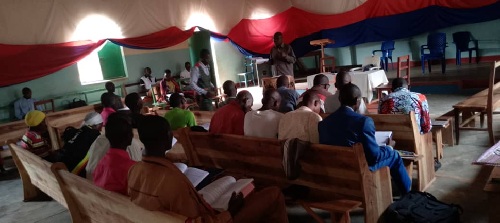
July was a relatively quiet month, as I took part of my annual leave and spent some time in Kenya for a medical check-up. However, upon my return, I had the opportunity to gather church leaders and students in Cankuzo and Mishiha from Monday, 20th to Friday, 24th July 2026. The gathering brought together both participants who are currently undergoing training and those who had already completed the course.
The activities were conducted at the Mishiha and Cankuzo training centres, with two days spent at each centre. The fifth day was used for travelling between the two locations and returning from the activities.
2. Purpose of the Gathering
The gatherings were organized as an opportunity for evaluation, sharing, encouragement, mutual support, comfort and learning from one another. The meetings provided a valuable opportunity for those who had completed the training to share their experiences and for those still undergoing training to learn from their examples.
Those who had graduated shared about what they are currently doing in their local churches and communities and how they are putting into practice the knowledge and skills they gained during the training. Their experiences were particularly helpful to those who are still in training, as they were able to see practical examples of how the training can be applied successfully in ministry.
3. Sharing Challenges and Experiences
We also took time to discuss some of the challenges that many of the participants encounter in their ministry. They shared openly about the difficulties they face and the different ways they respond to and overcome these challenges.
This was a valuable part of the gathering because participants were able to learn not only from one another's successes, but also from the challenges they encounter in their ministry. Through this sharing, they were encouraged to find practical ways of responding to difficulties and to remain committed to serving in their local churches.
4. Outcomes and Impact
One encouraging outcome of the gathering was the response of some senior pastors who participated from Cankuzo and Mishiha. After listening to the testimonies of those who had completed the training, they were encouraged by what the graduates are doing in their local churches and communities and by the positive impact their ministries are having.
As a result, some of the senior pastors expressed their desire to send more church leaders and members for training during the next intake. We encouraged them to identify and send suitable students for the coming training period. We assured them that we would be ready to receive the new participants and welcome them into the training as soon as they are prepared to begin.
This response was encouraging because it showed growing interest in the training and recognition of its value by church leaders. It also demonstrated the potential for the impact of the training to extend to more churches and communities through those who are equipped and sent out to serve.
5. Learning for Future Training
The gathering was also an important opportunity for us as trainers to reflect on the way we conduct the training. Listening to the experiences, successes, and challenges of both current students and graduates helped us identify areas where the training can be strengthened.
The discussions encouraged us to think about what additional elements and practical components can be included in the training so that it becomes more relevant, effective, and useful for participants in their ministry contexts. We learned that training should not only provide knowledge, but should also equip participants with practical skills and to continue to encourage them to apply what they have learned in their local churches and communities.
6. Conclusion
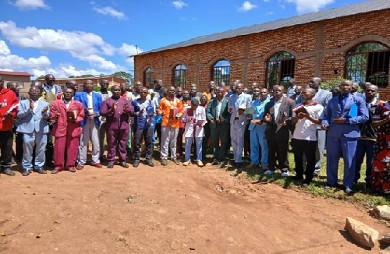
The gatherings at Mishiha and Cankuzo were a meaningful and encouraging experience for all the participants. Those who are still undergoing training were encouraged by seeing how previous graduates are applying what they learned in their own ministry contexts. At the same time, those who had completed the course were encouraged to reflect on their ministry experiences and to continue growing in their service to the Church.
Overall, the activity strengthened fellowship among the participants, encouraged mutual learning, and motivated them to put their training into practice. The positive response from senior pastors, including their willingness to send more people for the next intake, was a particularly encouraging sign of the growing value and relevance of the training.
The activity also gave us valuable insights into how we can improve the training we provide by adding appropriate practical elements and responding more effectively to the needs and realities of church leaders in their ministries.
We are grateful for this opportunity and for the support that makes this training possible. We pray that the knowledge, skills, and encouragement gained through the training will continue to bear fruit in the participants' local churches and communities and that the ministry will continue to reach and transform more lives.
TOP OF PAGE
REPORT ON THE BIBLICAL THEOLOGY TRAINING MISSION At Cankuzo and Rutana 09-17/05/2026
1. Introduction
From 9–17 May 2026, REMA Ministries successfully conducted a Biblical Theology Training Mission at the Cankuzo and Rutana Training Centres in Burundi. The mission marked the completion of the Biblical Theology course in both centres and provided a significant opportunity to strengthen church leaders through sound biblical teaching.
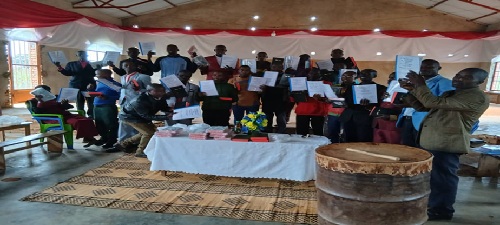
We were greatly honoured to receive Rev. Professor Changwon Shu from Korea, whose participation was a tremendous blessing to both the trainees and the wider Christian community. Although he joined us in teaching the course, his visit also had a broader strategic purpose for the future of theological education in Burundi.
2. Biblical Theology Training
The training focused on Biblical Theology, with special emphasis on the person and work of Jesus Christ throughout the whole Bible. Professor Shu clearly demonstrated how the Old Testament points to Christ and how God's promises, covenants, and prophecies find their fulfillment in the New Testament.
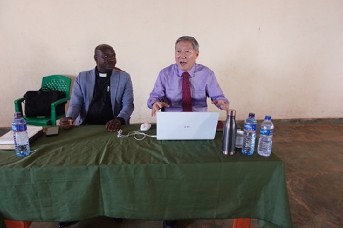
Participants gained a deeper appreciation of the unity of Scripture and came to understand that the New Testament can only be fully appreciated in light of the Old Testament. Through clear exposition, practical illustrations, and interactive discussions, the trainees strengthened their understanding of God's unfolding plan of redemption from Genesis to Revelation.
The participants responded enthusiastically throughout the training. Their eagerness to learn, thoughtful questions, and active participation reflected a genuine hunger for biblical truth and a desire to serve their churches more faithfully.
3. Gospel Ministry
In addition to teaching, Professor Shu preached the Gospel in Cankuzo, Rutana, and Gatumba (Bujumbura). His messages were firmly grounded in Scripture, centred on Christ, and communicated in a simple yet powerful way that was accessible to everyone. Many believers were encouraged, challenged, and strengthened in their faith. Church leaders expressed gratitude for the biblical depth of the teaching and the practical application of God's Word.
4. A Strategic Vision for Theological Education in Burundi
One of the most significant aspects of Professor Shu's visit was his desire to explore the possibility of establishing a theological seminary in Burundi. His vision is to help equip pastors and church leaders through quality theological education, leadership development, and missionary training. The proposed seminary would primarily serve students who already hold bachelor's degrees and wish to pursue master's-level theological studies. Such an institution would make an important contribution to raising future Christian leaders and strengthening the Church in Burundi.
At the same time, Professor Shu recognised the unique and essential ministry that REMA is already carrying out through the ECLEA training programme. The reality in rural Burundi is that many faithful pastors and church leaders have had little or no opportunity to attend Bible school or receive formal theological education. Some have not completed secondary school, yet they faithfully shepherd large congregations and are respected by the churches they serve.
The ECLEA curriculum is uniquely suited to this context. It is well structured, biblically sound, practical, and accessible to leaders of different educational backgrounds. It enables pastors serving in remote communities to receive systematic biblical and theological training that would otherwise be beyond their reach.
Sadly, many pastors in rural areas are often overlooked. Most seminars, conferences, and workshops are organised in major towns, where those who have already received theological education continue to benefit from additional training. Meanwhile, many rural church leaders have remained without opportunities for biblical instruction.
These pastors have repeatedly appealed to REMA for help. Their concern has become even more urgent following the government's indication that, in the coming years, church leaders may be required to possess recognised biblical or theological training in order to lead churches and preach publicly. Their request for training is therefore both a spiritual and a practical necessity.
Responding to this need lies at the very heart of REMA's mission. We believe God has called us to serve those who have the least access to theological education by providing biblical training that is practical, affordable, and rooted in Scripture.
We are especially grateful to Jonathan Menn, whose vision and commitment led to the development of the ECLEA training materials. These resources have become an invaluable tool for equipping pastors and church leaders across Burundi.
Professor Shu expressed his appreciation for this ministry and shared that, should his vision for a theological seminary become a reality, he would seek to have the ECLEA programme formally accredited. This would allow the certificates and diplomas awarded to our trainees to receive formal recognition through his theological institution, providing further opportunities for graduates while preserving the accessibility of the programme for rural church leaders.
5. Testimonies
Testimony 1
"Before attending this course, I knew many Bible stories, but I had never understood how the entire Bible points to Jesus Christ. This training has transformed the way I read and preach God's Word.
I now have greater confidence in teaching my congregation."
— A pastor from Rutana
Testimony 2
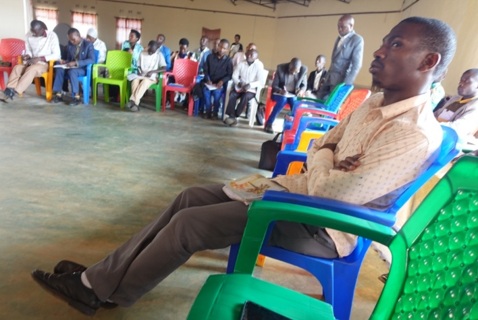
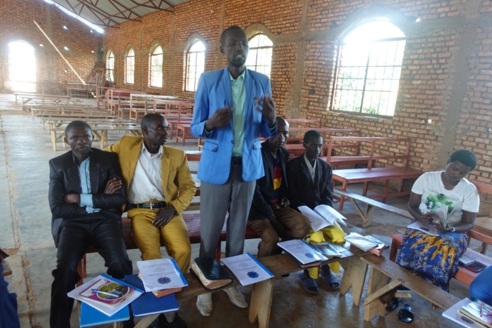
For many years I have served as a church leader without any formal biblical training. This course has opened my eyes to the unity of Scripture and has given me practical tools to teach God's Word faithfully. " I thank God that REMA has remembered pastors in the rural areas who rarely have opportunities like this."
— A church leader from Cankuzo
6. Conclusion
We thank God for the successful completion of the Biblical Theology course at both the Cankuzo and Rutana Training Centres. We are equally grateful for the fruitful ministry of Rev. Professor Changwon Shu and for the encouragement his visit brought to both the trainees and the leadership of REMA Burundi.
We pray that the biblical truths taught during this mission will continue to bear lasting fruit in the lives of the participants, strengthen churches throughout Burundi, and inspire a new generation of faithful Christian leaders. We also pray that God will guide every future step towards expanding theological education in Burundi for the glory of Christ and the advancement of His Kingdom.
TOP OF PAGE
ACTIVITY REPORT ON CHURCH LEADERS TRAINING THAT TOOK PLACE AT MUZYE TRAINING CENTER, MARCH 25–28, 2026
The Course: Study of the Book of Habakkuk
1. Background and Objective of the Mission
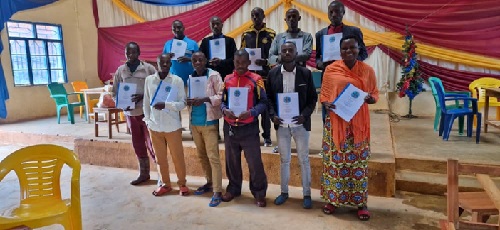
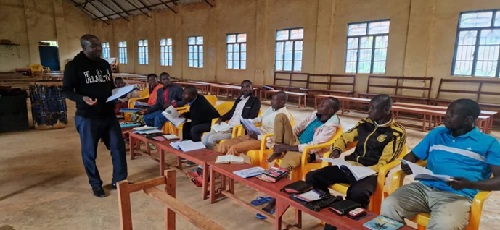
As part of strengthening the spiritual and doctrinal capacity of church leaders, a training session took place at Muzye training center, from March 25 to 28, 2026. The main objective of this course was to deepen the understanding of the Book of Habakkuk, enabling church leaders to effectively teach, preach, and apply its message within their own daily lives and in the lives of their respective congregations.
2. Training Proceedings:
Day 1:
1.1 As usual we start the training by sharing together what we have been doing during the two months of reading and writing from the previous lesson and give reports
1.2 Introduction to the Book of Habakkuk
* General overview of the historical context
* Author and period of writing
* The situation of the people of Judah
* Introduction to the central theme: “The righteous shall live by faith”
* Discussion groups.
Day 2: Dialogue Between Habakkuk and God
* The prophet’s complaints about injustice
* God’s responses
* Understanding God’s apparent silence
* Discussion groups
* Practical application in Christian life
Day 3: Faith in Difficult Times
* Study of Habakkuk 2:4
* Patience and trust in God
* Case studies and group discussions
Day 4: Prayer and Spiritual Restoration
* Study of Chapter 3 (Habakkuk’s prayer)
* Importance of worship even in times of crisis
* Discussion groups
* Participants’ commitments
3. Results and Impact
* Improved understanding of the Book of Habakkuk
* Strengthened faith among church leaders
* Increased capacity to teach Scripture
* Renewed commitment to ministry
4. Recommendations
* Organize more in-depth biblical training sessions
* Continue to allocate more time for group discussions
* Ensure follow-up after the training
5. Conclusion
The training was successfully conducted and proved to be a great blessing to all participants. The message of the Book of Habakkuk particularly encouraged church leaders to remain steadfast in faith despite challenges.
TOP OF PAGE
REPORT ON CHURCH LEADERS TRAINING ON BIBLICAL LITERATURE (OT&NT OVVERVIEW): MARCH 2026
1. Introduction
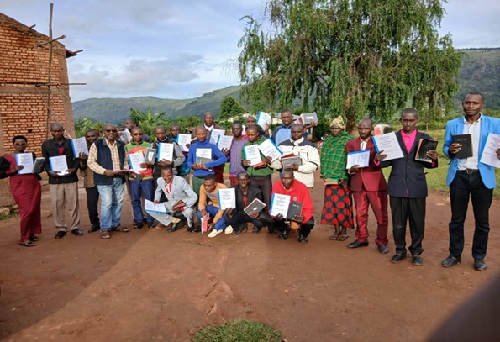
A church leaders training took place respectively at Cankuzo and Rutana training centers from March 23rd to 26th, 2026. This report presents the outcomes of the training on Biblical Literature, focusing on an overview of the Old Testament (OT) and New Testament (NT). The training aimed to strengthen the capacity of church leaders to understand, teach, and apply the Bible effectively in their ministries and communities. Each session lasted four days, and identical content was delivered in both centers. The training was successful.
2. Objectives of the Training
The main objectives of the training were:
* To provide a comprehensive overview of the Old and New Testaments
* To help participants understand the unity of the Bible
* To equip church leaders with tools to interpret Scripture accurately
* To inspire leaders to teach and promote Bible study within their congregations
3. Training Content and Methodology
3.1 Content Covered
The training focused on the following key areas:
Overview of the entire Bible (Old and New Testaments)
The eight periods of Israel s history, including their characteristics and corresponding books
The relationship between the Old Testament and the New Testament, emphasizing fulfilment - Major themes across the Bible - Key themes from each of the 66 books of the Bible
4. Key Outcomes and Impact
The training achieved the following outcomes:
Participants developed a clearer understanding of the structure and message of the Bible
Trainees recognized the New Testament as the fulfilment of the Old Testament, which was a major learning milestone
All participants committed to memorizing the 66 books of the Bible
Participants expressed readiness to:
- Teach biblical content more effectively
- Encourage Bible reading and understanding among their congregations
- Promote the application of Scripture for personal and community transformation
5. Testimonies from Participants
The testimonies below highlight the impact of the training:
1. "I had always wondered how the New Testament relates to the Old Testament. This workshop helped me understand that the NT is the fulfillment of the OT promises. It's like a puzzle falling into place! Now I see the bigger picture."
2. "I was amazed to learn that Israel's history covers only 8 periods from Genesis to Esther! I used to think it was more complex, but now I understand the flow. I was including the prophetic books, but now I see they fit within those periods. I'm excited to share this with my church."
3. Several participants expressed enthusiasm about gaining a comprehensive overview of Scripture, noting that it made the Bible easier to understand and teach.
9. Recommendations
Based on the outcomes of the training, the following recommendations are proposed:
* Organize advanced or follow-up trainings to deepen understanding in biblical litterature
* Establish mentorship or peer-learning groups among trainees
10. Conclusion
The training in both Cankuzo and Rutana was highly successful and impactful. Participants demonstrated a strong commitment to applying what they learned and passing it on to their congregations.
They resolved to:
Teach their congregations to memorize the books of the Bible
Encourage regular Bible reading and understanding
Promote practical application of Scripture
The training is expected to contribute to spiritual growth, strengthen churches, and transform communities.
During the training we were able to donate new bibles to our trainees
During the training we weere able to donote new bibles to our trainees
Students share about the outcomes and the impact thie course is going to have in their own lives, their churches and their local communities as weell.
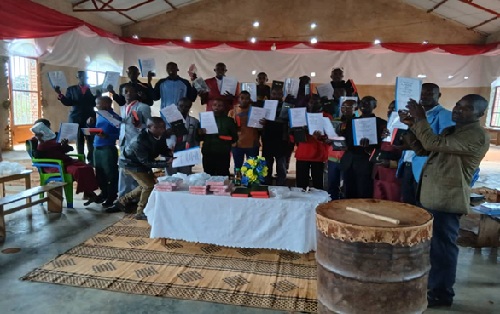
Trainees participate fully as they enjoy the course
TOP OF PAGE
MISSION REPORT: TRAINING OF CHURCH LEADERS IN MISHIHA Dates: March 17–21, 2026
1. Introduction
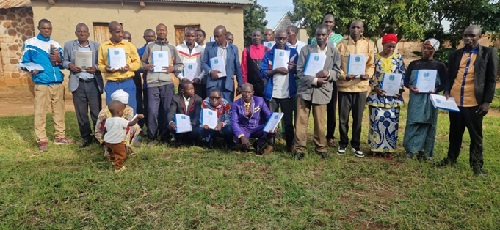
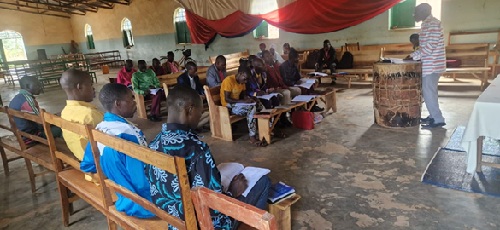
From March 17 to 21, 2026, a mission was conducted in Mishiha to train church leaders on the book Christianity and Islam. The purpose of this training was to continue to equip leaders with a deeper understanding of the relationship between Christianity and Islam, enabling them to minister effectively in a context where interfaith interactions are increasingly common. This was to do with the second part of the book.
2. Objectives of the Training
- To strengthen the theological understanding of church leaders.
- To provide knowledge about Islam and its relationship with Christianity.
- To equip participants with practical tools for peaceful coexistence and effective evangelism.
- To encourage dialogue and mutual respect among different faith communities.
3. Participation
As usual, the training brought together several church leaders from Mishiha and surrounding areas. Participants showed strong commitment and active engagement throughout the sessions.
4. General Context in Mishiha
The mission took place in a very challenging environment. Life in Mishiha is currently extremely difficult due to the return of refugees from Tanzania. This situation has led to:
- Increased poverty among the population.
- Severe food shortages and famine.
- A significant rise in the prices of basic food commodities.
- Cultural mixing, which has brought both opportunities and challenges.
As a result, the living conditions are very precarious, and many families struggle to meet their daily needs.
5. Observations
- Despite the difficult circumstances, participants remained highly motivated and eager to learn.
- Church leaders expressed a strong desire to better serve their communities during this crisis.
- The training was timely, as it addressed both spiritual and social realities faced by the community.
In light of the current difficult situation affecting many families in Mishiha communities, we as trainers, we sincerely took an opportunity to encourage all churches to remain watchful, prayerful, and actively engaged. Many people—especially the poor, vulnerable, and those who are repatriating—are facing serious needs and uncertainty. We are aware that various groups are reaching out to support these individuals through the provision of food and other essential items. This reminds us of the importance of the Church also rising to meet these needs with compassion, unity, and wisdom.
During the time of training, church leaders were encouraged to reflect on how they can continue to work more closely in unity, setting aside differences, and developing practical strategies to respond to the needs around them. This remains a vital call for us today.
We therefore urge all churches in Mishiha and in other location to:
* Be attentive to the needs within their communities.
* Strengthen unity and cooperation among congregations.
* Seek practical ways to support the poor, vulnerable, and returning families.
* Remain spiritually alert and intentional in their mission.
* Engage thoughtfully and respectfully with people of all backgrounds, while remaining grounded in their faith.
This is a time not to withdraw, but to open our eyes and respond with love, care, and purpose. Let us take initiative to serve, protect, and guide those entrusted to us. All believers in Christ must engage himself/herself in Muslim evangelism.
6. Challenges Faced
- Economic hardship affecting participants’ ability to fully concentrate.
- Limited resources for organizing the training.
- The general instability caused by the influx of returnees.
7. Recommendations
- Organize follow-up trainings to reinforce the knowledge gained.
- Provide humanitarian support to the most vulnerable families.
- Encourage churches to develop community-based support initiatives.
8. Conclusion
The training held in Mishiha from March 17 to 21, 2026, was a significant success despite the challenging conditions. It not only strengthened the capacity of church leaders but also brought hope and encouragement to a community facing serious socio-economic difficulties.
TOP OF PAGE
ACTIVITY REPORT: CHURCH LEADERS TRAINING
Muzye and Rutana Centers – February 2026
1. Introduction
A church leaders training was conducted simultaneously in Muzye and Rutana centers from Monday, 23rd to Friday, 27th February 2026. The training focused on the study of the book Christianity and Islam. Two trainers facilitated the sessions: NITUNGA Francois led the training in Muzye, while NDUWIMANA Patrice conducted the sessions in Rutana. Both trainings were successfully carried out and well received by participants.

2. Aim of the Training
The main aim of the training was to equip church leaders with biblical knowledge and practical skills to better understand Islam, promote peaceful coexistence, and strengthen effective Christian witness among Muslim communities.
3. Objectives
The training pursued the following objectives:
* To help church leaders understand the basic beliefs and practices of Islam.
* To strengthen participants’ knowledge of the Christian faith in comparison with Islamic teachings.
* To equip leaders with tools for evangelism among Muslims.
* To help trainees clearly understand the difference between Jesus Christ and Muhammad, and deepen their understanding of who Jesus Christ is.
4. Course Content
During this training session, the first part of the book Christianity and Islam was covered. The main topics included:
* Basic Overview of Islam,
* Jesus and Muhammad
* Sin and Salvation
These topics provided a foundational understanding for further study.
5. Christianity and Islam - Reflection
As we went through the course, the trainees came to recognize that teaching church leaders about Islam is essential for fostering informed, loving, and effective engagement with Muslim neighbours. This training helps to correct misinformation and equips leaders to address theological differences with grace and understanding. It also enables them to clearly articulate key Christian doctrines—such as the Trinity—in today’s context, while promoting peaceful coexistence, mutual respect, and awareness of the rapid global growth of Islam.
5.1 The trainees unanimously expressed the following conviction:
“If we want to see a strong and healthy Church, we must dedicate much of our time to teaching what Christianity is truly about. We need to emphasize discipleship, encourage believers to read the Bible and understand its message, and help them live Christ-centered and transformed lives. If we are not attentive and watchful, Islam may take the lead and influence our nation. Therefore, we urge that all Christians, in every local church and training institution, be equipped and motivated to understand Muslims and to minister among them.”
They further emphasized that training at the local church level should address both pastors and congregation members. The focus should include :
* Overcoming fear and prejudice toward Muslims
* Encouraging believers to build positive and respectful relationships with Muslims, including learning how to live as good neighbours
* Providing accurate and balanced information about Islam and the diversity within Muslim communities
* Equipping churches to welcome, support, and care for believers from a Muslim background
6. Training Methods
Various participatory and adult-learning (andragogic) methods were used, including:
* Group discussions
* Question-and-answer sessions
* Interactive teaching approches
These methods encouraged active participation, sharing of experiences, and deeper understanding of the topics.

7. Outcomes
The training yielded positive results:
* Participants expressed great appreciation for the course and showed eagerness to continue learning until they complete the entire book.
* Many testified that they discovered new insights about Islam that they had not known before.
* Participants acknowledged that their understanding had significantly improved, describing the experience as “an opening of their eyes.”
8. Challenges
Despite the success of the training, several challenges were encountered:
* The training period coincided with the rainy season, and frequent rainfall disrupted sessions.
* Some participants were unable to attend due to illness.
* The training also took place during the agricultural season, when many participants were occupied with farming activities, particularly searching for manure or chemical fertilizers for planting. This affected attendance and punctuality.
9. Testimonies from Participants
9.1 Testimony from Rutana center:
“Before this training, I did not know much about Islam. I used to fear engaging with Muslims because I lacked understanding. Now I feel confident because I It is better I have joined this training, because I was ignorant about what Islam is all about especially concerning their believes, as I knew that we are worshipping one true God. Now I am getting somewhere, as I have learned this first part of the course on the Basic Overview of Islam, Jesus and Muhammad, Sin and Salvation. My desire is to try to do my best to finish the whole course, so that I may engage myself in reaching out my fellow Muslims with proposer knwoldge, I am trying to go to Tanzania to see if I will get the Coran their book and read it thoroughly. I want to be equipped before I go to reach them. Because “If I don’t reach them now, they will reach my children, or my gran children, or my relatives and moreover the Christian I am serving ion my church. I want to be watchful. God help me”.
8.2 Testimony from Muzye trainees:
“This training is opening my eyes. I now clearly understand the difference between Jesus Christ and Muhammad. I am encouraged to go back and teach others in my church what I have learned.”
8.3 Testimony from Muzye trainees:
“What I have learned is that, as church leaders, we need to understand Islamic beliefs in order to engage in informed and respectful conversations—especially regarding key differences such as the deity of Christ, the Trinity, and the authority of the Bible. It is also essential that all who call themselves Christians live authentic, Christ-like lives among Muslim neighbours, friends, colleagues, and contacts.”

9. Conclusion
The church leaders training held in Muzye and Rutana centers was a success despite the challenges encountered. The objectives were largely achieved, and participants were equipped with essential knowledge and tools for ministry among Muslim communities. There is a strong desire among the trainees to continue with the remaining parts of the course. Continued training and follow-up sessions are therefore highly recommended to reinforce and expand the knowledge gained.
Before ending the training, we had a good time to do a deep reflection on what we had learned so far.
I praise God that, that reflection demonstrated the deep impact of the training and the growing desire among church leaders to engage wisely, lovingly, and faithfully in their mission within a multi-religious context.
Francois Nitunga
TOP OF PAGE
Report on the Church leaders training held in Mishiha, Cankuzo and Buhiga January 2026
1. Introduction
In January 2026, a series of structured training sessions for church leaders was organized across three centres: Mishiha and Cankuzo from the 9th to the 13th, and Buhiga from the 23rd to the 27th. The focus of these sessions was the study of the first part of the book Christianity and Islam. This decision was made in light of both the considerable length of the text and the explicit request of participants to proceed at a deliberate pace. Trainees emphasized that the subject matter is of critical importance, as it directly relates to the challenges they encounter in their pastoral work, particularly in addressing questions surrounding Islam and its perceived expansion.

2. Participants
Leaders from different church denominations in three centers: Mishiha, Cankuzo and Rutana
This training served as a platform for leaders to engage deeply with the material, to strengthen their understanding of Islam, and to reflect on appropriate responses within their communities and ministries.
3. The course
During this first part of training this course, we looked and covered two major topics: the BASIC OVERVIEW OF ISLAM, JESUS AND MUHAMMAD then SIN AND SALVATION.
3.1 Why this course is needed in this particular time
Islam appears to be forever in the news. Islamic issues and Muslim politics feature in the media more often than not. And Islam is felt by many Christians to pose something of a threatening challenge. Or at least this seems to be the case. But why should this be so? In what ways might Islam be a challenge to Christianity? Our trainees asked themselves those questions.
3.2 Our reaction to their queries
We are going to try to see what the church can do using this good well researched manual from Jonathan Menn. We hope that at the end of this course many church leaders will change their worldview and began to engage in Muslim evangelism. Because if we don t reach them, they will reach us, if not us, they will reach our children, if not our children they will reach our grandchildren, at the end all our relatives will be reached.
3.3 Trainees followed attentively the journey of Mohamed

At Medina, Muhammad laidm down the basis for Islamic religious belief and practice belief in the oneness of God, and in himself as the last of God s prophets; the disciplined practice of prayer five times per day; the dawn to dusk daily fast during the lunar month of Ramadan; the paying of an annual charity tax for support of the poor and needy; and eventually the re-establishment of the Hajj as the annual great pilgrimage to Mecca, to be enjoined upon all Muslims at least once in their lifetime health and wealth, and nowadays also Saudi quotas and visas, permitting.
3.4 Unanimously students said that in order to prevent the growth of Islam in our regions is to teach children
They said: It is very important to learn about Islam at the youngest age
Learning Islam from a young age builds identity, instills discipline, and strengthens the heart with faith. It nurtures values like honesty, kindness, and respect, ensuring children grow as responsible Christians . They added: We must be sincere in our desire to
to learn Islam. We are learning this Deen to rid ourselves, firstly, of ignorance and then to help others to rid themselves of ignorance .
Another student said that his very happy to understand that we Christians are not worshipping the same God as Muslims, as I was believing it and understanding it. From Now I know what mighty God I am worshipping and serving.
4. Christian-Muslim relations

In our study, while sharing in our open discussions we for sure found that those who have joined Islamic religion and those who are joining it today, are direct members of our families, close relatives, neighbours and our close friends as well.
Amazingly together with the trainees found that, early in Muhammad s life he viewed Christians as friends, and this is no doubt the situation many Muslims desire, however, near the end of his life, his great commission was different.
Fight those who do not believe in Allah and the Last Day and do not forbid what Allah and his messenger (Muhammad) have forbidden, and do not acknowledge the religion of truth from those who have been given the book (Christians and Jews), until they pay the jizyah (terms of surrender) from their hand when conquered. The Jews say, Ezra is the Son of Allah , the Christians say, The Messiah is the Son of Allah. That is what they say with their mouths, like the unbelievers before them. May Allah fight them! How they are deluded. He is the one who has sent his messenger with the guidance and the religion of truth, to make it prevail above every religion. (Qur an 9:29-33)
4.1 There is no specific mention of Islam in the Bible for the obvious reason that Islam was still 600 years in the future.
As we kicked of the training, the trainees were amazed to discover that the Bible does not say about Islam. There is no specific mention of Islam in the Bible for the obvious reason that Islam was still 600 years in the future. Responses to Islam might be derived from general warnings about false prophets in Matthew 7:15 and those who corrupt the gospel in Galatians 1 or under general statements that we all and thus, Muslims too need the We wanted the trainees to feel the weight of the specific preparation the Qur an gives the Islamic world about Christianity: the cross, salvation, the Trinity, incarnation, the fatherhood and son of God, hermeneutics, romance, and a political agenda.
5. Testimonies

Today I say no to ignorance
I have found myself from the beginning of this course we are studying now, that
Learning about Christianity is compulsory for Muslims, but learning about Islam is optional for Christians. The result is that when a Christian meets a Muslim, the Muslim is very often prepared, while, the Christian is not. This situation is both a challenge and opportunity. It is a challenge because the Islamic arguments are well resourced, and do lead some Christians to convert to Islam. Now I want thoroughly to follow this important course up to the end of this book because I don t want to remain ignorant. Today I say no to ignorance: Not knowing what to do and Islam is winning and converting our Christian. If we do not pay attention Mishiha , our locality will be soon Islamised. My people are destroyed for the lack of knowledge (Hos.4:6).
We have un obligation to understand it in order for us to take proper action before it becomes too late.
During my minisirty as a church leader, I have spoken to hundreds of Muslims and they have never brought up the Five Pillars of Islam with me. Instead, they regularly bring up what the Qur an says about Christianity. This is where we should start with our training for Christians, precisely in our local churches. They will remember it and it is practical. Therefore, go slowly as you take us through in this important course until we understand it in order for us to take proper action before it becomes too late. We have no time to waste.
6. Conclusion
Learning about Christianity is compulsory for Muslims, but learning about Islam is optional for Christians. The result is that when a Christian meets a Muslim, the Muslim is very often prepared, while, the Christian is not.
This situation is both a challenge and opportunity. It is a challenge because the Islamic arguments are well resourced, and do lead some Christians to convert to Islam. But it is equally a great opportunity, because Muslims are meant to learn about Christianity!
Muhammad not only knew about Christianity, he made it a major subject in the Qur an
At the end, majority among our students requested us to try to do the best we can to look for them where they can get a Coran so that they may be reading it as many Muslims read our Bible.
In all, let the glory be to the almighty God.
TOP OF PAGE